The art of a storytelling photoshoot
anyone can teach you how to pose a client.
Stop Photographing Poses.
$997 OR 3×$333 · LIFETIME ACCESS
22 lessons, 6 modules
FIRST INQUIRY TO FINAL GALLERY
Live Photoshoot Examples
REAL GALLERIES, FRAME BY FRAME
Lifetime Access
EVERY FUTURE UPDATE INCLUDED
Chapter One
Before you scroll, read this first.
This course assumes you already know your camera. If you’re still learning exposure, manual settings, or how to get a sharp image consistently, this isn’t your next step and I’d rather say so now.
Go spend six months on YouTube (seriously!) Free content is can teach you the technical fundamentals before you reach this point.
This is for the photographer who already has the technical part handled, but you’re still not making work you’re proud of. You’ve been shooting for a while and know how to make a sharp, well exposed, clean image… but it just looks like everyone else’s. It’s missing the emotion you see in your inspiration.
That’s a completely different problem. It’s the one this solves.
Chapter two: The shoot you keep having
You walk up to your clients, make small talk
for about three minutes, then pull your camera
out so they don’t feel like you’re wasting their time.
You blank. The anxious panic sets in while your clients
stare at you, waiting for direction. You revert to the
five poses you know like the back of your hand, repeating
them and saying “this looks great!” to fill the silence.
You ask them to walk to another spot for better light
(but honestly, you just need ten seconds to think of a new
pose instead of “kiss with your teeth” one more time.)
You get home, upload to Lightroom, and it’s fine.
Clean photos with correct exposure, but no emotion.
It looks like your last four shoots and there’s nothing
special or unique about it.
Then you open Pinterest, go to your Photography Inspo
folder, and screenshot the same photographer you always
screenshot, holding your phone up against your nose, trying
to work out how their clients look so natural when yours
look like they’re holding still for a dental x-ray.
the problem was never your eye.
Chapter Three: The Distinction
Everyone teaches you to plan the photos. Nobody teaches you to prepare the people.
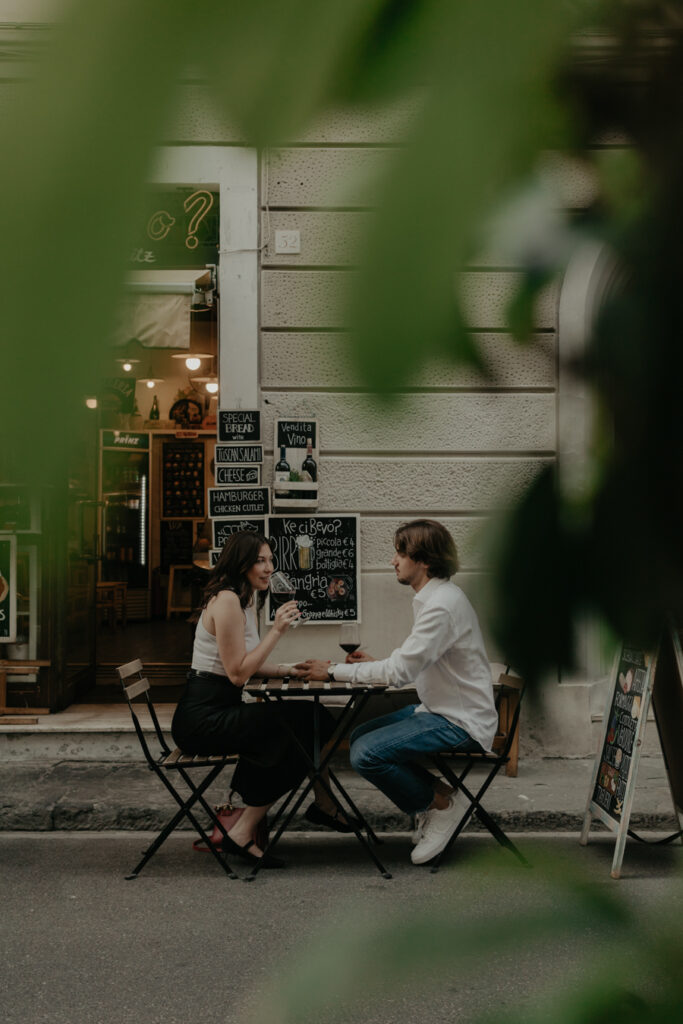
WHAT EVERY OTHER COURSE DOES
Storyboard the scenes. Build the shot list. A handful of poses or prompts, light and grading. Basically, a checklist of technicals until a stiff frame finally looks like it captured something.
That’s directing. And directed love always looks directed, no matter how good the color is.
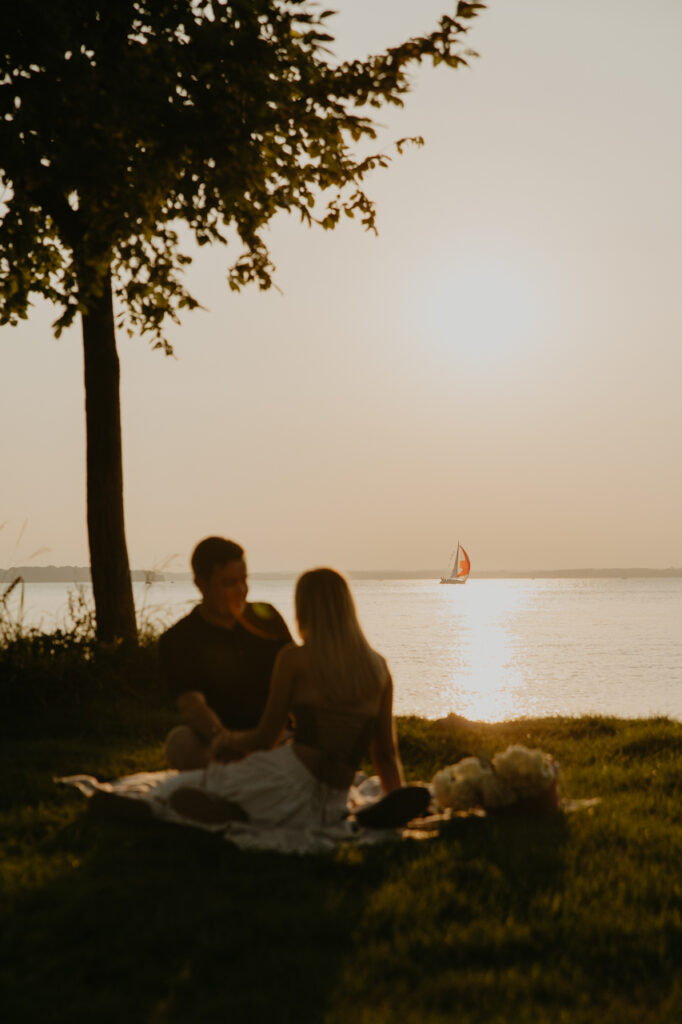
WHAT THis DOES
A couple who arrives nervous and unsure gives you awkward, guarded photos. A couple who arrives trusting you gives you vulnerability and feeling.
And almost all of that is decided before you get there: in how you market, what you attract, and exactly what you say to them in the weeks before the shoot.
No amount of composition technique fixes a couple who doesn’t want to be there. That’s not a shooting problem. It’s a preparation problem, and it happens before anyone picks up a camera.
The shoot becomes a story.
Chapter Four: What Changes
You stop directing and start documenting.
The version of you that says “now look at each other and laugh naturally” is gone. You build a moment real enough
that the laugh just happens, and your only job is being ready for it.
Your galleries get the moments you can’t pose for.
Quiet forehead touches, a pinky promise you didn’t prompt, a brush of hair out of
each others’ faces. The look one gives the other when they’ve forgotten the camera exists.
The frames that make your clients emotional on delivery (and book your next ten).
People start searching you by name.
Not “a photographer in our budget.” You.
You stop competing on price because you’ve stopped being comparable.
You want to shoot again.
The boredom lifts. You stop screenshotting the same three photographers wondering
what they have. You build a body of work that actually looks like your vision.
Chapter Five: The Method
The whole thing happens in three phases. Most photographers only work on the middle one.
Modules 1-3
Phase One: Before the Camera Comes Out
What documentary actually is, as a method rather than an aesthetic. How to market a style so the people booking you want it without you convincing them on the call. The exact communication during planning that gets a couple arriving relaxed instead of performing. Location, light, timing, and creative direction chosen to give real moments somewhere to happen.
Module 4
Phase Two: The Shoot
The module that kills the mid-shoot panic. When to use prompts that don’t feel awkward, and how to catch the real frame in the seconds after the prompt ends. Plus the technicals: shot types, composition, framing., space and tension. Plus a dedicated section on families, because documentary works on chaos with kids too!
Modules 5-6
Phase Three: After the Shutter
Cinematic editing and color that support the emotion of the moment, cropping your galleries for variety. And curating a gallery that lets someone relive the day rather than scroll a pile of pretty photos that are pretty much the same thing on repeat.
Why the order matters:
You cannot catch a real moment you haven’t built the conditions for. Most photographers spend every dollar of education on phase two, which is why their work plateaus. They’re getting better at executing a shoot that was already decided before they arrived.
Includes TWO COMPLETE SHOOTS
Every decision narrated and shown in real time.
Theory is easy to nod along to and hard to use. So you’re coming with me onto two real sessions.
A home baking shoot
indoor & activity-based, Watch me navigate a tiny kitchen and messy flour turned into a love story.


An outdoor beach shoot
Windy & open, with a couple who has never done a photoshoot together. Watch exactly how I set up real moments and catch them in real time.
“Can’t I just figure this out from YouTube?”
You’ve been trying to. That’s what the Pinterest folder is.
You’ve watched the reels, saved the breakdowns, asked AI to explain what makes an image feel cinematic. You’ve consumed an enormous amount of free information and your galleries still look the way they look. So the honest answer isn’t that free content is bad, it’s just hat you’ve already run that experiment.
Here’s why it didn’t work:
You can’t search for the answer to a question you don’t know you have. Nobody types “what do I do in the three seconds after the prompt ends,” because until someone shows you, you don’t know that’s where the real frame lives.
Information transfers. Judgment doesn’t. Anyone can tell you to create a natural moment. Nobody can tell you what to do when the couple is stiff, the light is going, and the activity you planned isn’t working. Because that’s a decision, which are learned by watching someone make them.
And it’s in order. Free content is four hundred disconnected videos with no sequence. This is one path, built so each piece only makes sense because of the one before it.
EVERYTHING YOU GET:
The full course
22 lessons across 6 modules, from first inquiry to final gallery. Lifetime access, including every future update.
My location scouting checklist
So you stop picking pretty backdrops and start picking places that create real moments.
Two full live shoot walkthroughs
One of each: indoor and outdoor, from start to finish.
Pre-shoot style guide tips
What to send clients so they show up relaxed, styled, and ready to be themselves.
Brand style prompts
To define your own signature look instead of copying the photographers you keep screenshotting.
25+ photoshoot activity ideas
Real things to put couples in motion, because motion makes moments and standing still makes stiff poses.
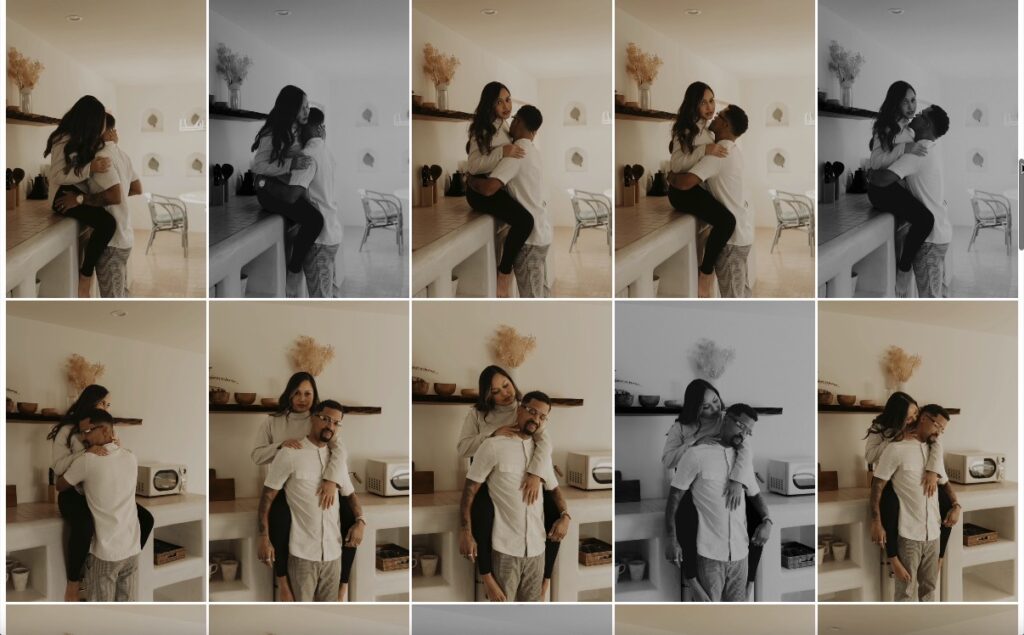
Before
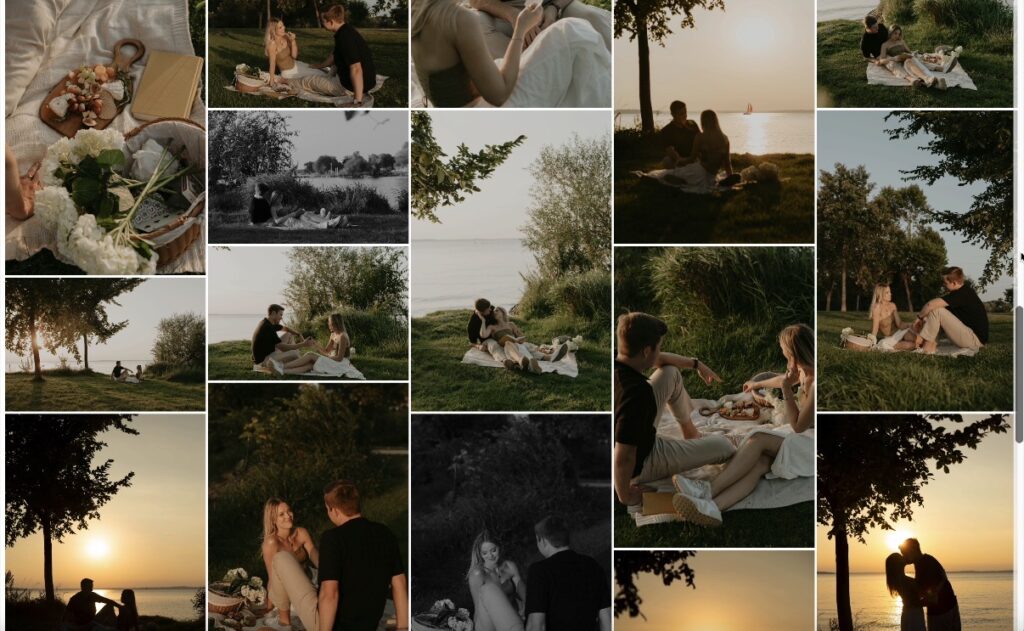
After
THE MODULES
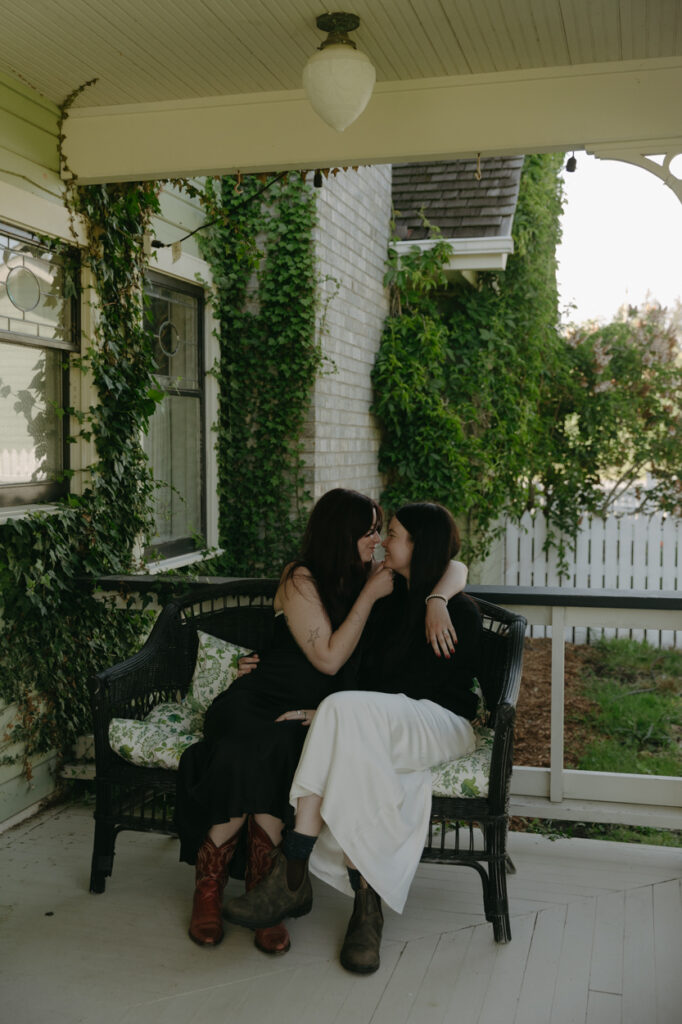
Module 1: The Background
Before you touch the camera
Most photographers think documentary is a look. It’s not. It’s a way of seeing, and once you get it, you can’t unsee it. In this module, we define exactly what separates documenting from posing, so every decision you make for the rest of the course has a reason behind it.
Module 2: Early Client Communication
The shoot is half-done before they show up
A couple who shows up nervous and unsure gives you awkward, guarded photos. A couple who shows up trusting you gives you everything. Most of that is decided long before the session: it’s in how you market and how you talk to them before you ever arrive on location.
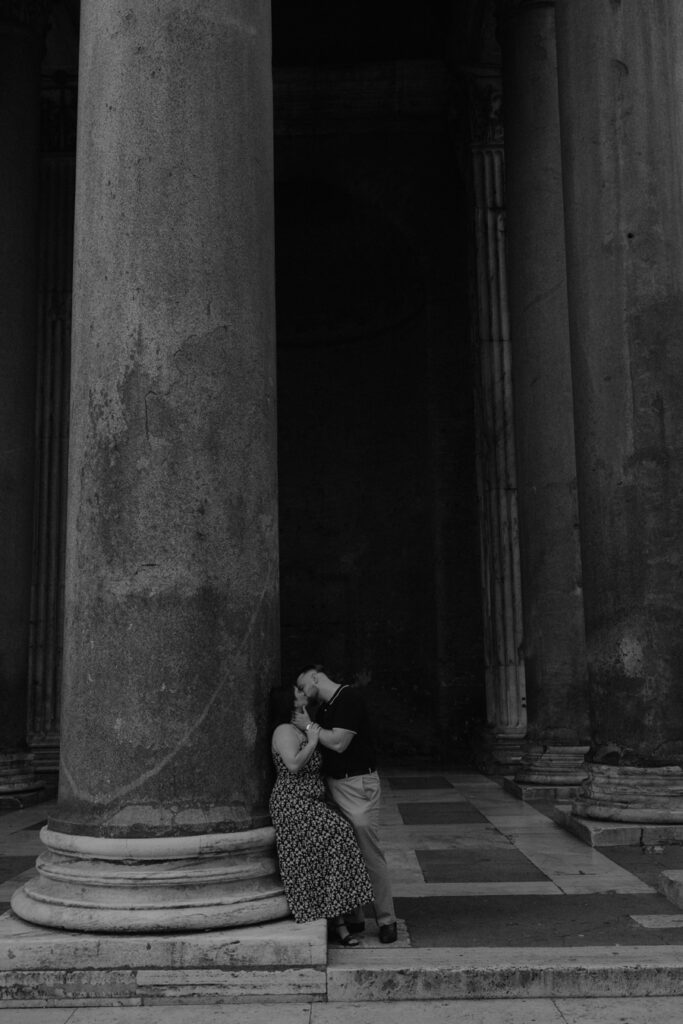
Module 3: PLanning the Shoot
How I plan a shoot so the real moments have somewhere to happen
You can’t force a real moment, but you can build a situation where one is almost guaranteed. This is the planning that does that (still before anyone picks up a camera.)
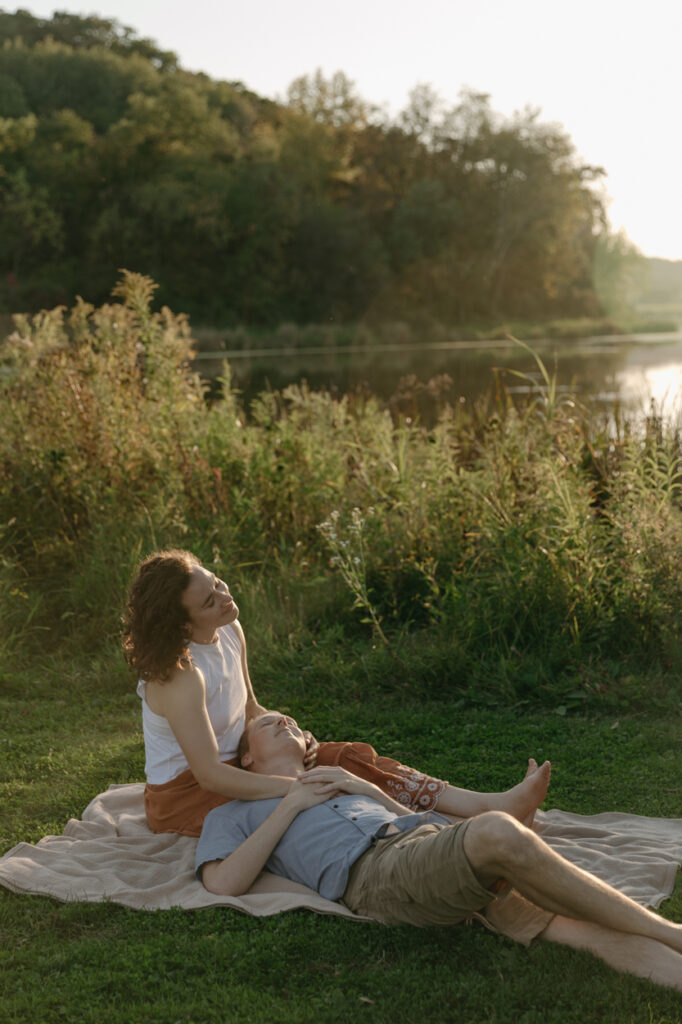
Module 4: Photoshoot Day
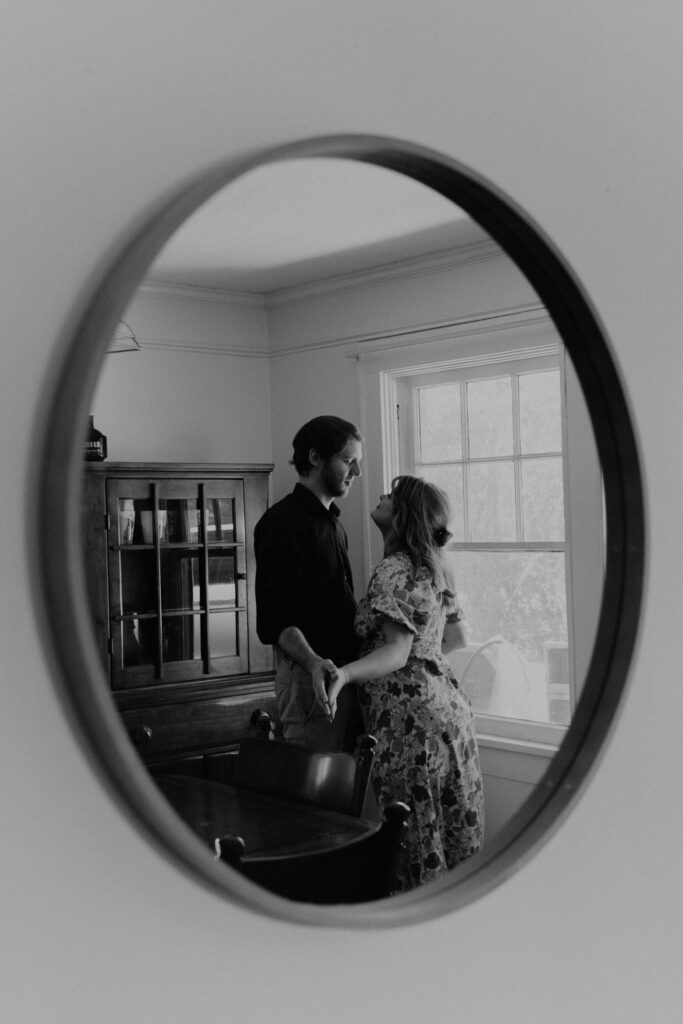
Where most photographers freeze, you’ll know exactly what to do
This is the module that kills the panic. No more blanking, no more stalling, no more cheesy prompts. You’ll know how to move a couple, what to say, and what to catch in the seconds in between.
Module 5: After the shoot
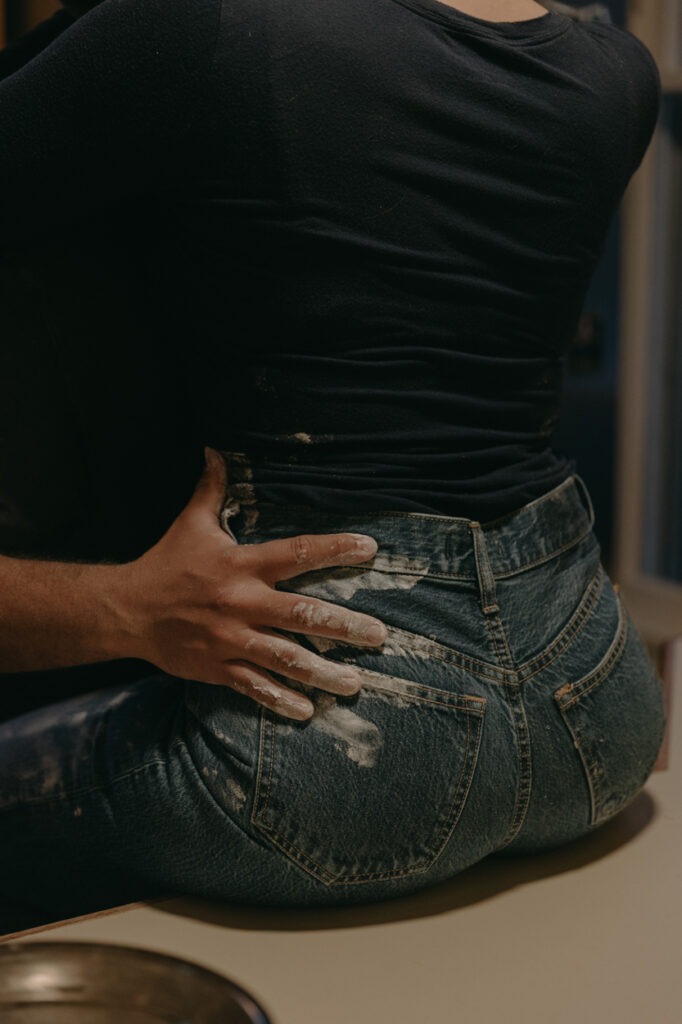
The story gets made three times: Once in planning, once on location, and once at your desk
You can shoot a real moment and then edit the life right out of it. This module makes sure the feeling survives the edit and the gallery actually tells the story intentionally.
Module 6: Live Photoshoot examples
Watch me do the whole thing, In Action
Theory is easy to nod along to and hard to use. So you’re coming with me onto two real shoots to watch every choice as I make it, including the ones that don’t go to plan.
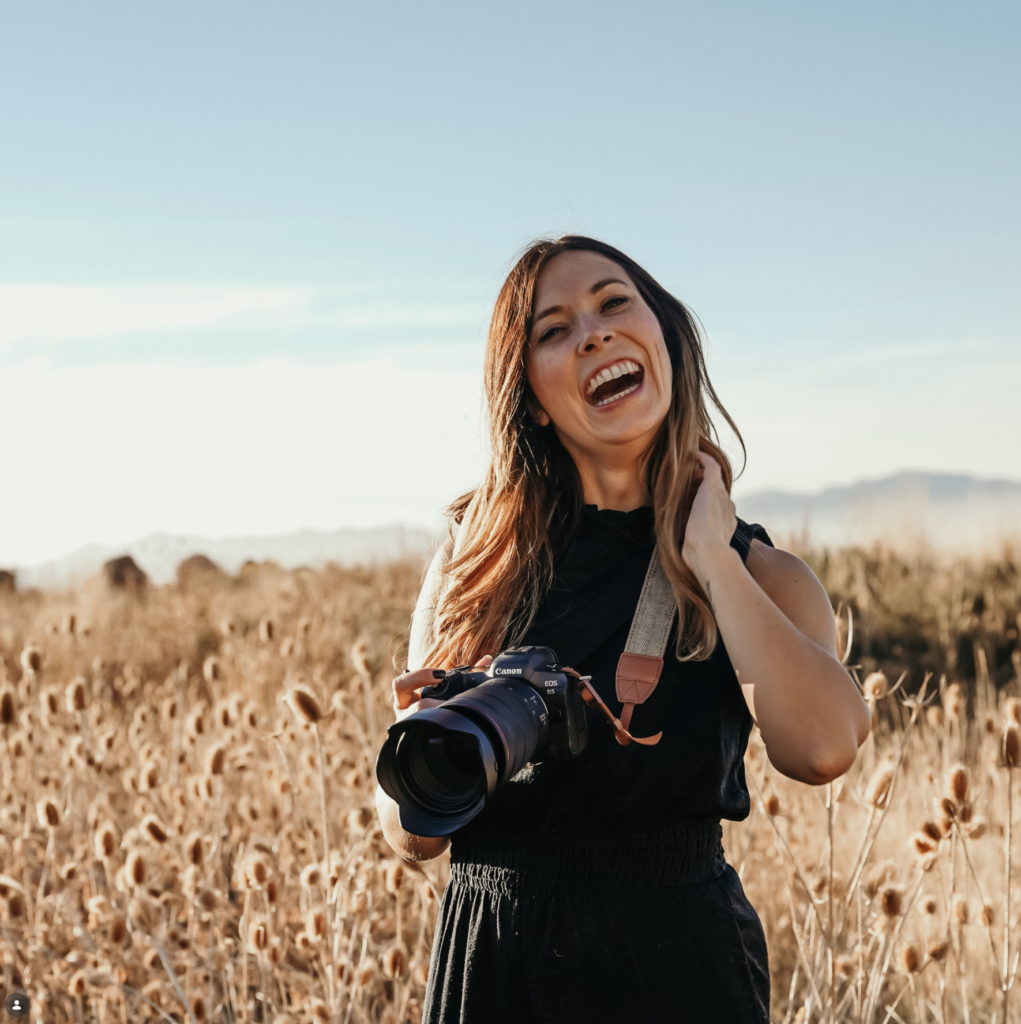
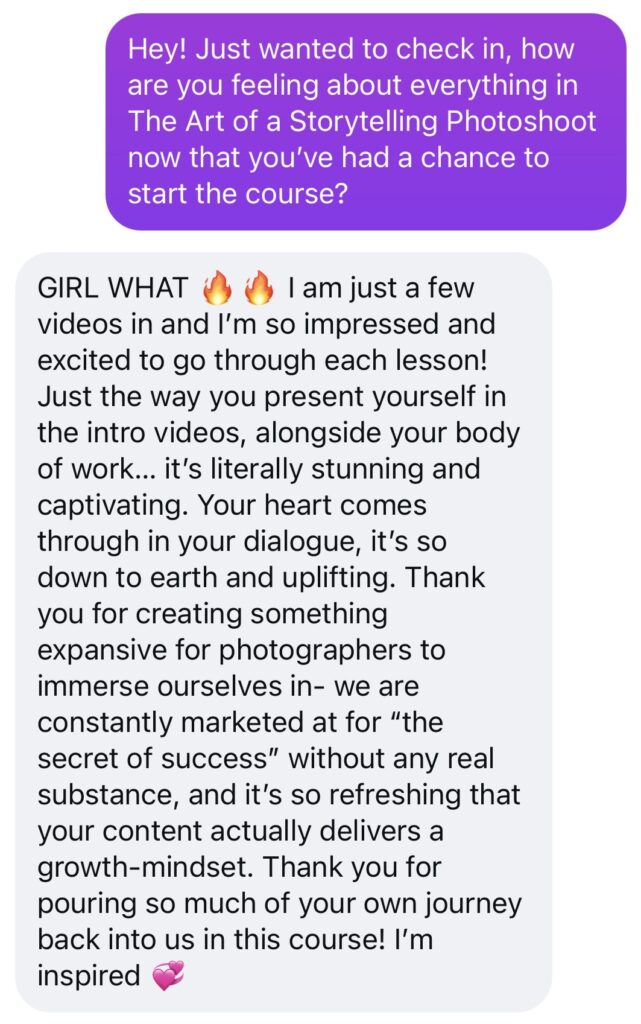
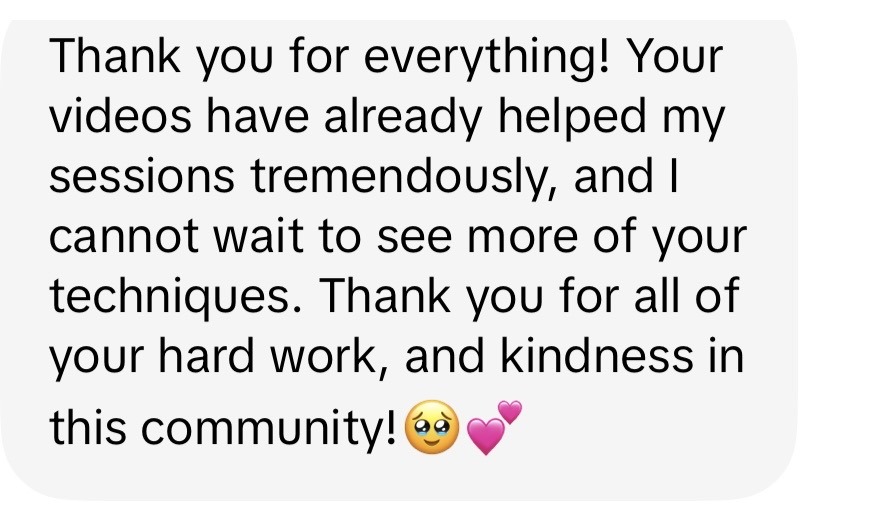
“I have done multiple education courses, guides, and continuing education for photography, and they all feel ambiguous. They rely on showing their work and saying ‘trust me.’
Out the gate, starting your course, it’s very obvious that you are an authentic human. There’s no gatekeeping. It feels like we could literally be having a cup of coffee. It’s actionable, it’s personable, and I can connect to it.
I feel inspired, but the way you break down your process feels approachable to anyone at the same time. You show up in a learning environment that feels safe and warm. And it makes me want to go out and shoot, which I honestly haven’t felt that in a long time.”
– Kelli Beavers, Wedding Photographer
WHAT IT COSTS:
$997
OR 3 PAYMENTS OF $333
Here’s the math I’d want if I were you: this course was designed to cost 1-2 bookings.
But it isn’t just priced against that. It’s priced against the ceiling you’re sitting under right now, where you get compared to every other photographer in your area, because your work is comparable to theirs, so the only thing left to compete on is price.
The photographers who get booked by name aren’t better exposed. They’re making art nobody else in their market is making.
This course IS for you if:
You’ve been shooting at least a year, feel technically solid, and your galleries aren’t where you want them emotionally
You’re drawn to documentary or cinematic work and don’t fully know how to get there
You want a signature style, not a trend
You’ve watched another photographer’s reel and thought how do they get their clients to look so natural
You want a signature style, not a trend
This course ISN’T for you if:
You’re happy with posed, traditional work. Completely valid, but just not what this is.
You want presets or editing tutorials. This is about the shoot, not a one click post-processing template.
You want a shortcut. This changes how you work before the shoot, during it, and after.
Questions:
“I’ve already bought posing courses. How is this different?”
Because this isn’t a posing course. Every posing course you’ve bought taught you to pose better. This teaches you to stop directing and start documenting, which is the skill those courses skip entirely. If posing courses worked for the work you want to make, you wouldn’t still feel like something’s missing.
“I’m not full-time yet.”
Doesn’t matter. This isn’t about volume, it’s about how you see. Whether you shoot two sessions a month or twenty, the difference between posing and documenting is the difference between a hobby that looks like a hobby, and work that looks like art.
“I don’t shoot couples. I shoot families / seniors / lifestyle.”
The couple is just my main example. Documentary is a way of seeing, and it works on anyone with a real relationship in front of your lens. There’s a dedicated family section, and every concept, composition, prompting, catching the real frame, translates directly across different subjects.
“How long does it take?”
Plan 1–2 hours per module. Most photographers get through it in 2–3 weeks, then come back to specific lessons before shoots. You can implement in your very next session. (Module 2 alone changes how you write your next client email.)

Chapter SIX: Why I built this
This is the course I wish I’d taken years ago.
For years I powered through a list of poses. I rushed couples through mini sessions, forced every frame to try to match the feed aesthetic I was trying so hard to build, and it quietly had the opposite effect. I was burnt out, and honestly bored of my own portfolio. The galleries were fine, but they were also lifeless, and I knew it.
So I stopped forcing it. I put the pose list down and started watching what happened when I got out of the way. Instead of trying to force frames that “looked candid,” I created a space to allow real, natural moments to unfold.
And I instantly saw a change in my galleries. As well as my inquiries, and my reviews, and the way I felt walking into a shoot. I fell back in love with the work, and I started to think every photographer stuck where I had been deserved to find the way out.
So I put every year of trial and error, adjustments and tweaks into one course. Everything I do, exactly how I do it, built so it translates straight to your next session.
If you’re ready to stop posing and start documenting, this is the step.
You can keep posing… or you can start documenting.
The poses got you a business.
Storytelling is what makes it yours.
Another season of “kiss with your teeth” and photos you’d never hang on your own walls.
Or the version of your work where people book you because nobody else sees the way you see.